The AI Skills Gap is Real, and Growing
AI is transforming industries faster than ever before. From finance to healthcare to recruitment, organisations are racing to integrate AI into daily operations.
But there’s a problem: the skills needed to make AI work are in short supply. BDO’s Human-Centric Transformation in the Age of AI report revealed that 31-34% of leaders cite lack of talent and skills as a top obstacle to AI adoption.
For recruiters, this presents both a challenge and an opportunity.
Which Skills Are in Demand in the Age of AI?
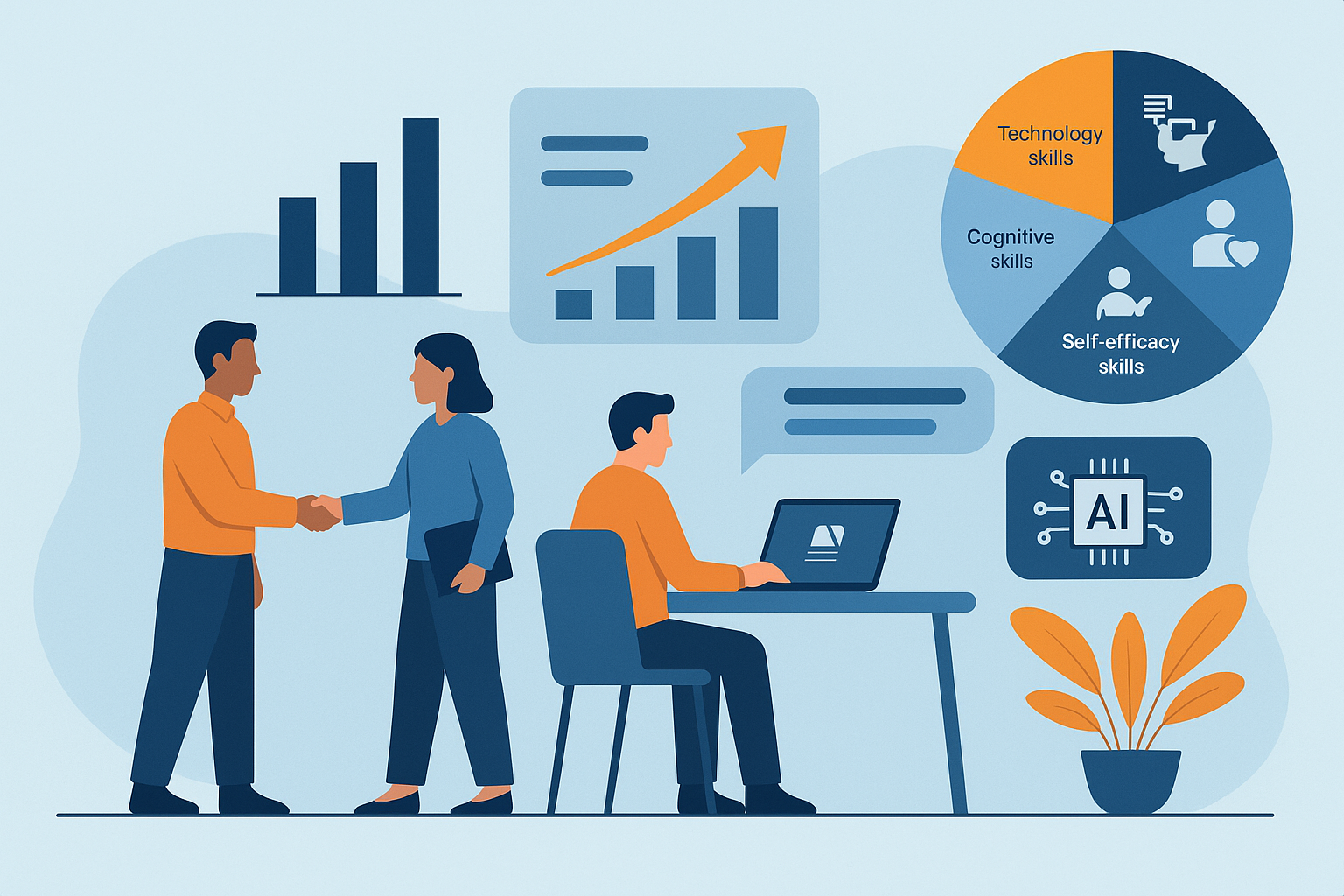
Drawing on World Economic Forum data, the BDO report outlines the five critical skill groups that will surge in importance between now and 2030:
- Technology skills: AI literacy, big data, cybersecurity, programming.
- Cognitive skills: Creative thinking, analytical reasoning, systems thinking.
- Interpersonal skills: Empathy, communication, leadership, collaboration.
- Self-efficacy skills: Resilience, adaptability, curiosity, lifelong learning.
- Fusion skills: Blending human judgement with AI outputs to make better decisions.
Recruiters must understand this evolving skills map to guide employers in hiring strategies.
The Role of Recruiters in Closing the Gap
Recruiters are not just filling roles, they’re shaping the workforce of the future.
By understanding the AI skills gap, recruiters can:
- Educate employers on realistic candidate expectations.
- Spot transferable skills (e.g., analytical thinking from finance can apply to data roles).
- Advocate for upskilling alongside external hiring.
- Position AI skills as a competitive advantage for employers looking to attract talent.
Upskilling vs. Hiring: Finding the Balance
When faced with the AI skills gap, companies usually take one of three approaches.
The BDO report shows the most common are:
- Upskilling and reskilling existing employees
Cost-effective and builds loyalty. Employees already know the business, so layering AI skills makes sense. - Hiring new AI-ready talent
Sometimes external talent is essential, particularly for technical roles like data scientists or AI ethicists. - Hybrid approach
The most successful organisations mix both—developing current employees while bringing in external specialists.
Recruiters play a key role in advising employers on which route to take.
Practical Steps for Employers and Recruiters
- Run AI readiness diagnostics
Assess current employee skills, openness to AI, and cultural readiness before launching new tools. - Map AI use cases to roles
Identify which jobs will be most affected by AI and what new competencies will be required. - Design role-specific training
Instead of generic AI literacy programmes, create tailored pathways (e.g., “AI for Recruiters” or “AI in Finance”). - Build partnerships
Work with recruiters who understand the AI landscape and can source talent with both technical and soft skills. - Focus on retention
Employees trained in AI will be in high demand. Transparent career paths, mentorship, and growth opportunities will be essential.
Why This Matters for Recruitment
The AI skills gap isn’t a buzzword, it’s a real business risk and opportunity.
Companies that fail to address it may struggle to stay competitive, while those that bridge the gap will unlock innovation, efficiency, and growth.
Recruiters who understand the AI skills landscape are better positioned to:
- Place high-demand candidates faster.
- Advise clients on workforce strategies.
- Build long-term trust as strategic partners.
Final Thoughts
AI isn’t just about automation, it’s about people. The organisations that thrive will be the ones that treat AI adoption as a human journey, not just a technical upgrade.
These insights are drawn from BDO’s 2025 report, Human-Centric Transformation in the Age of AI, which explores how businesses can unlock value by putting people at the centre of AI adoption.
At TalentVine, we believe recruiters are at the heart of this journey. By connecting employers with recruiters who understand both today’s needs and tomorrow’s skills, we help businesses future-proof their hiring strategies.
Given that AI is still a way off from replacing humans in critical roles, the right recruiters are still the right way to find the right people for your next role. Get started with hiring on TalentVine today.
More insights: Check out our thoughts on what the future of recruitment might look like.
Sign up to our newsletter to stay up to date
Do you have a recruitment question?
Call or email our friendly customer service team to get an answer to your recruitment questions.
Do you have a recruitment question?
Call or email our friendly customer service team to get an answer to your recruitment questions.